 Rainline Garden
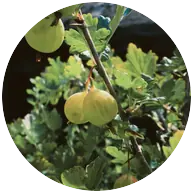
When to plant gooseberries in Wenatchee, WA
Plant gooseberry bushes in Wenatchee Mar 20 – May 15.
- Difficulty
- Easy
- Sun
- Full sun to part shade
- Spacing
- 4 to 5 feet apart
- Planting depth
- An inch or two deeper than in the pot
- Frost
- Hardy perennial; comes back every year
- First harvest
- A small crop in year two; full crops from year three
Why these dates
Wenatchee's typical last spring frost is April 8. As a hardy perennial, this crop doesn't need to wait for that date. In the Columbia Basin and low eastern valleys, though, the soil usually isn't ready to work until about March 20.
Columbia Basin and low eastern valleys. Hot, dry summers and quick spring warm-up. Warm crops go in earlier than west of the Cascades, and irrigation matters more than rain.
How to grow gooseberries in Wenatchee
- Pick a sunny spot with soil that drains well, and mix in an inch or two of compost.
- Plant gooseberry bushes Mar 20 – May 15, 4 to 5 feet apart. An inch or two deeper than in the pot.
- Prune in late winter to open the center of the bush and remove stems older than three years. Thick gloves help.
- Harvest: Pick green for cooking when the berries are full-sized but firm, or leave them a few weeks to soften and sweeten for eating fresh.
Key numbers
- Full sun to part shadeSun
- 6.0–7.0Soil pH
- 15–20 yearsProductive life
- Powdery mildewBiggest risk
Growing notes
What makes the difference in Northwest gardens, in plain language.
Green, red and dessert gooseberries
Gooseberries ripen from early to midsummer. Picked green and firm, they're tart and perfect for pies, sauces and jam. Left to ripen, many turn red, yellow or purple and get sweet enough to eat fresh. They're compact, very hardy bushes that do well in cool summers.
Mildew and currantworm
Powdery mildew is the main disease: a white, felty coating on leaves and fruit. Plant mildew-resistant varieties like Invicta, Hinnonmaki Red or Captivator, keep the center of the bush open and avoid heavy nitrogen feeding.
In spring, imported currantworm larvae can strip leaves fast. Check the undersides of lower leaves from April and pick them off or spray with spinosad.
Pruning
Gooseberries fruit on one- to three-year-old wood. In late winter, remove stems older than three years and any that cross or crowd the center. Pruning to an open, goblet shape improves airflow (fewer disease problems) and makes the thorny bush easier to pick.
Common questions
When is the last frost in Wenatchee, WA?
Typically April 8. In 9 years out of 10, frost is over by April 23. These are 1991–2020 NOAA climate normals for Wenatchee Pangborn Airport.
Is it too late to plant gooseberries in Wenatchee?
The spring planting window runs through May 15. Potted plants can still go in later if you water them faithfully through their first summer.
How long until I can pick gooseberries?
A small crop in year two; full crops from year three. Pick green for cooking when the berries are full-sized but firm, or leave them a few weeks to soften and sweeten for eating fresh.
When are gooseberries ripe?
For cooking, pick when full-sized but still firm. For eating fresh, wait until they soften slightly and reach full color.
Are there thornless gooseberries?
Captivator is nearly thornless. Most other varieties have thorns, so wear thick gloves.
Can gooseberries spread white pine blister rust?
They can host it, though less readily than black currants. Rust-resistant varieties reduce the risk.
Also plant in Wenatchee around the same time
 Peas
Peas Radishes
 Spinach
 Lettuce
 Onions
 Carrots
 Beets
Beets Kale
KalePlanting dates for gooseberries in nearby areas
- Omak and Okanogan, WA Apr 1 – May 27
- Chelan, WA Mar 20 – May 15
- Leavenworth, WA Apr 1 – May 27
- Winthrop and Twisp, WA Apr 3 – May 29
- Pendleton, OR Mar 20 – May 15
- The Dalles, OR Mar 20 – May 15
Full planting calendar for Wenatchee · Gooseberries in every city