 Rainline Garden
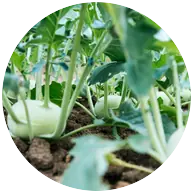
When to plant kohlrabi in John Day, OR
Plant kohlrabi in the garden in John Day Apr 30 – Jun 11, either as seeds or as young plants started indoors Mar 19 – Apr 2. For a fall harvest, plant again Jul 17–31.
- Difficulty
- Easy
- Sun
- Full sun
- Spacing
- Thin to 6 inches apart
- Planting depth
- ¼ to ½ inch deep
- Frost
- Handles light frost
- First harvest
- About 55 days after planting
Why these dates
John Day's typical last spring frost is May 28. As a cool-season crop that handles light frost, this crop can go in about 4 weeks before that.
High desert and mountains. Central and high eastern Oregon. Frost is possible almost any month. Use row covers, wall-o-water or cloches for warm crops, and choose short-season varieties.
How to grow kohlrabi in John Day
- Start seeds indoors Mar 19 – Apr 2 in trays or small pots under a grow light or in your sunniest window. Or skip this step and buy young plants (starts) at a garden center.
- Harden off the young plants: about a week before planting, set them outside for a few hours a day, a little longer each day.
- Plant them in the garden Apr 30 – Jun 11, Thin to 6 inches apart. If you plant seeds instead, sow them ¼ to ½ inch deep.
- Water deeply once or twice a week rather than a little every day, and mulch once the soil is warm.
- Plant again Jul 17–31 for a fall harvest.
- Harvest: Cut bulbs at 2 to 3 inches across. Peel off the tough skin and eat raw or cooked.
Key numbers
- 45–85°FSoil to sprout
- 6.0–7.5Soil pH
- 2–3 inches acrossHarvest size
- Cabbage wormsBiggest risk
Growing notes
What makes the difference in Northwest gardens, in plain language.
Soil and steady growth
Kohlrabi is in the cabbage family, and the bulb is actually a swollen stem that sits above the soil. It wants fertile soil with compost, a pH of about 6.0 to 7.5, and steady moisture. Feed lightly at planting. The key to a tender bulb is fast, uninterrupted growth: dry spells or heat make the flesh fibrous. Mulch once plants are up to keep the soil evenly moist.
Timing and why bulbs get woody
Kohlrabi is quick, about two months from seed, and prefers cool weather. Spring crops should go in early, and starts set out too early into a long cold spell may bolt instead of forming a bulb. In the Northwest, fall crops sown in midsummer are especially reliable. Bulbs turn woody when left too long or when grown in hot weather, so pick at tennis-ball size. Kossak is an exception: it's bred to grow large while staying tender, and it stores well. East of the Cascades, get spring crops in early to beat the heat.
Pests, harvest and storage
Cabbage worms chew the leaves; insect netting keeps the white butterflies from laying eggs. Root maggots and flea beetles can also show up, and the same cover helps. Cut the stem just below the bulb when it reaches 2 to 3 inches across. Remove the leaves (young ones are good cooked), peel the tough outer skin, and eat it raw or cooked. Bulbs keep several weeks in a bag in the fridge, and longer for large storage types.
Common questions
When is the last frost in John Day, OR?
Typically May 28. In 9 years out of 10, frost is over by June 15. These are 1991–2020 NOAA climate normals for John Day.
Is it too late to plant kohlrabi in John Day?
The spring planting window runs through June 11. If you miss it, plant again for fall from July 17 to July 31.
When should I start kohlrabi from seed indoors in John Day?
March 19 to April 2, which is 6 to 4 weeks before the April 30 planting date. Or buy young plants at a garden center instead.
Why is my kohlrabi woody?
It was likely left to grow too big, grown in hot weather, or short on water. Pick at about tennis-ball size and keep the soil evenly moist. Cool-season crops are the most tender.
How do you know when kohlrabi is ready?
When the bulb is 2 to 3 inches across, usually about two months after sowing. Cut it at the base. Don't wait too long, since bigger bulbs toughen quickly.
What part of kohlrabi do you eat?
Mainly the round bulb, which is a swollen stem. Peel off the tough skin and eat it raw like an apple-crisp radish or cooked. The young leaves can be cooked like kale.
Also plant in John Day around the same time
 Peas
Peas Radishes
 Spinach
 Lettuce
 Onions
 Carrots
 Beets
Beets Kale
KalePlanting dates for kohlrabi in nearby areas
- Baker City, OR Apr 27 – Jun 8
- Pendleton, OR Apr 1 – May 13
- The Dalles, OR Apr 1 – May 13
- Hood River, OR Apr 1 – May 13
- Hermiston, OR Apr 1 – May 13
- Ontario, OR Apr 1 – May 13
Full planting calendar for John Day · Kohlrabi in every city