 Rainline Garden
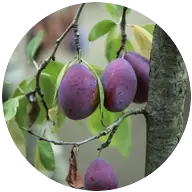
When to plant plum trees in Salem, OR
Plant plum trees in Salem Mar 1 – Apr 26.
- Difficulty
- Easy
- Sun
- Full sun
- Spacing
- 12 to 15 feet apart for dwarf or semi-dwarf trees
- Planting depth
- Graft union 2 to 3 inches above the soil
- Frost
- Hardy perennial; comes back every year
- First harvest
- First plums in three to five years
Why these dates
Salem's typical last spring frost is April 3. As a hardy perennial, this crop doesn't need to wait for that date. In the west-side valleys, though, the soil usually isn't ready to work until about March 1.
West-side valleys. The Willamette Valley, Puget Sound and southern Oregon valleys. Long frost-free seasons, but soil stays cold and wet into May, so warm crops wait for warm soil, not just the last frost.
How to grow plum trees in Salem
- Pick a sunny spot with soil that drains well, and mix in an inch or two of compost.
- Plant plum trees Mar 1 – Apr 26, 12 to 15 feet apart for dwarf or semi-dwarf trees. Graft union 2 to 3 inches above the soil.
- Water deeply through the first two summers. Prune lightly in summer, not winter, which lowers the risk of silver leaf and canker. Thin heavy crops so branches don't snap.
- Harvest: Pick when the fruit is fully colored, slightly soft and comes off easily. Prune plums for drying should hang until they wrinkle slightly at the stem.
Key numbers
- 3–5Years to fruit
- Self-fertileEuropean plums
- Summer, in dry weatherWhen to prune
- Brown rotBiggest risk
Growing notes
What makes the difference in Northwest gardens, in plain language.
European or Japanese plums
European plums, including Italian prune and Stanley, bloom later and fruit on their own, which makes them the easiest choice for most Northwest gardens. Their dense, sweet flesh is great fresh, dried or baked. Japanese plums such as Shiro and Methley bloom earlier, have juicier fruit and ripen in mid-summer. Shiro sets a much better crop with another Japanese plum nearby, and Methley is a popular partner because it's partly self-fertile. In frost-prone spots, the earlier bloom of Japanese plums can get caught by a cold snap.
Why plums are pruned in summer
Plums and other stone fruits are prone to silver leaf and bacterial canker, which enter through pruning cuts in cool, wet weather. Cuts made in dry summer weather heal fast and stay clean. Prune lightly after harvest or in July, removing dead wood, crossing branches and tall upright shoots.
Heavy crops are common. Thin young fruit to 3 to 4 inches apart in early summer: the remaining plums grow bigger, brown rot spreads less between touching fruit, and branches are less likely to snap.
Harvest and brown rot
Brown rot is the main Northwest plum problem. It blights blossoms in rainy springs and turns ripening fruit into fuzzy gray balls that dry into mummies. Those mummies carry the fungus into next year, so pick them off the tree and the ground. Good airflow and thinning help a lot.
Italian prunes are sweetest when left to hang until they wrinkle slightly at the stem. Japanese plums soften quickly once ripe, so check every couple of days.
Common questions
When is the last frost in Salem, OR?
Typically April 3. In 9 years out of 10, frost is over by April 27. These are 1991–2020 NOAA climate normals for Salem McNary Field.
Is it too late to plant plum trees in Salem?
The spring planting window runs through April 26. Potted plants can still go in later if you water them faithfully through their first summer. Fall planting also works well here.
How long until I can pick plum trees?
First plums in three to five years. Pick when the fruit is fully colored, slightly soft and comes off easily. Prune plums for drying should hang until they wrinkle slightly at the stem.
Do plum trees need a pollinator?
European plums like Italian prune and Stanley are self-fertile and fruit fine alone. Japanese plums such as Shiro do much better with another Japanese plum nearby.
What's the difference between a prune and a plum?
A prune plum is a European plum with dense, sweet flesh that dries well without fermenting at the pit. Italian prune is the classic Northwest variety, and it's just as good eaten fresh.
Why are my plums rotting on the tree?
That's usually brown rot, a fungus spread by wet weather. Thin the fruit so plums don't touch, remove any shriveled mummies from the tree and the ground, and pick promptly when ripe.
Also plant in Salem around the same time
 Peas
Peas Radishes
 Spinach
 Lettuce
 Onions
 Carrots
 Beets
Beets Kale
KalePlanting dates for plum trees in nearby areas
- Eugene, OR Mar 1 – Apr 26
- McMinnville and Newberg, OR Mar 4 – Apr 29
- Corvallis and Albany, OR Mar 1 – Apr 26
- Cottage Grove, OR Mar 13 – May 8
- Portland, OR Mar 1 – Apr 26
- Gresham, OR Mar 1 – Apr 26