 Rainline Garden
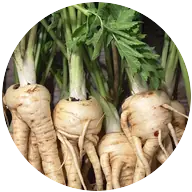
When to plant parsnips in Oregon and Washington
In Portland: Plant parsnips from seed, directly in the garden, Mar 15 – Apr 26. In Bend: May 12 – Jun 23. Find your city below.
- Difficulty
- Moderate
- Sun
- Full sun
- Spacing
- Thin to 3 to 4 inches apart
- Planting depth
- ½ inch deep
- Frost
- Handles light frost
- First harvest
- About 120 days after planting
Slow to sprout and slow to grow, but nearly carefree after that. Use fresh seed every year, and leave the roots in the ground until after a few frosts: cold turns their starch to sugar.
Parsnips planting dates
| City | Plant in the garden |
|---|---|
| Portland, OR | Mar 15 – Apr 26 |
| Seattle and Tacoma, WA | Mar 15 – Apr 26 |
| Eugene, OR | Mar 15 – Apr 26 |
| Spokane, WA | Apr 15 – May 27 |
| Bend and Redmond, OR | May 12 – Jun 23 |
| Tri-Cities (Pasco, Kennewick, Richland), WA | Apr 1 – May 13 |
Find your town
Portland area, OR 6 towns
| City | Plant in the garden |
|---|---|
| Gresham, OR | Mar 15 – Apr 26 |
| Hillsboro and Beaverton, OR | Mar 19 – Apr 30 |
| Oregon City and West Linn, OR | Mar 15 – Apr 26 |
| Portland, OR | Mar 15 – Apr 26 |
| St. Helens and Scappoose, OR | Mar 15 – Apr 26 |
| Wilsonville and Canby, OR | Mar 15 – Apr 26 |
Willamette Valley, OR 5 towns
| City | Plant in the garden |
|---|---|
| Corvallis and Albany, OR | Mar 15 – Apr 26 |
| Cottage Grove, OR | Mar 27 – May 8 |
| Eugene, OR | Mar 15 – Apr 26 |
| McMinnville and Newberg, OR | Mar 18 – Apr 29 |
| Salem, OR | Mar 15 – Apr 26 |
Southern Oregon, OR 4 towns
| City | Plant in the garden |
|---|---|
| Ashland and Talent, OR | Apr 8 – May 20 |
| Grants Pass, OR | Mar 15 – Apr 26 |
| Medford, OR | Mar 15 – Apr 26 |
| Roseburg, OR | Mar 15 – Apr 26 |
Oregon Coast, OR 5 towns
| City | Plant in the garden |
|---|---|
| Astoria, OR | Apr 1 – May 13 |
| Brookings and Gold Beach, OR | Apr 1 – May 13 |
| Coos Bay and North Bend, OR | Apr 1 – May 13 |
| Newport and Lincoln City, OR | Apr 1 – May 13 |
| Tillamook, OR | Apr 1 – May 13 |
Central Oregon and the high desert, OR 6 towns
| City | Plant in the garden |
|---|---|
| Bend and Redmond, OR | May 12 – Jun 23 |
| Burns, OR | May 14 – Jun 25 |
| Klamath Falls, OR | May 12 – Jun 23 |
| Lakeview, OR | May 7 – Jun 18 |
| Madras, OR | Apr 21 – Jun 2 |
| Prineville, OR | May 4 – Jun 15 |
Columbia Gorge and eastern Oregon, OR 9 towns
| City | Plant in the garden |
|---|---|
| Baker City, OR | Apr 27 – Jun 8 |
| Enterprise and Joseph, OR | Apr 26 – Jun 7 |
| Hermiston, OR | Apr 1 – May 13 |
| Hood River, OR | Apr 1 – May 13 |
| John Day, OR | Apr 30 – Jun 11 |
| La Grande, OR | Apr 15 – May 27 |
| Ontario, OR | Apr 1 – May 13 |
| Pendleton, OR | Apr 1 – May 13 |
| The Dalles, OR | Apr 1 – May 13 |
Seattle and Puget Sound, WA 6 towns
| City | Plant in the garden |
|---|---|
| Bremerton and Port Orchard, WA | Mar 15 – Apr 26 |
| Everett, WA | Mar 15 – Apr 26 |
| Kent, Renton and Auburn, WA | Mar 15 – Apr 26 |
| Olympia, WA | Apr 1 – May 13 |
| Seattle and Tacoma, WA | Mar 15 – Apr 26 |
| Shelton, WA | Mar 30 – May 11 |
North Sound and the islands, WA 5 towns
| City | Plant in the garden |
|---|---|
| Anacortes, WA | Mar 15 – Apr 26 |
| Bellingham, WA | Mar 15 – Apr 26 |
| Friday Harbor and the San Juans, WA | Mar 15 – Apr 26 |
| Mount Vernon and Burlington, WA | Mar 15 – Apr 26 |
| Oak Harbor and Whidbey Island, WA | Mar 15 – Apr 26 |
Olympic Peninsula and coast, WA 6 towns
| City | Plant in the garden |
|---|---|
| Aberdeen and Hoquiam, WA | Apr 1 – May 13 |
| Forks, WA | Apr 1 – May 13 |
| Long Beach and Ilwaco, WA | Apr 1 – May 13 |
| Port Angeles, WA | Mar 15 – Apr 26 |
| Port Townsend, WA | Mar 15 – Apr 26 |
| Sequim, WA | Mar 24 – May 5 |
Southwest Washington, WA 3 towns
| City | Plant in the garden |
|---|---|
| Centralia and Chehalis, WA | Mar 25 – May 6 |
| Longview and Kelso, WA | Mar 15 – Apr 26 |
| Vancouver, WA | Mar 15 – Apr 26 |
Wenatchee and the Okanogan, WA 5 towns
| City | Plant in the garden |
|---|---|
| Chelan, WA | Apr 1 – May 13 |
| Leavenworth, WA | Apr 15 – May 27 |
| Omak and Okanogan, WA | Apr 15 – May 27 |
| Wenatchee, WA | Apr 1 – May 13 |
| Winthrop and Twisp, WA | Apr 17 – May 29 |
Yakima Valley and Columbia Basin, WA 8 towns
| City | Plant in the garden |
|---|---|
| Ellensburg, WA | Apr 15 – May 27 |
| Ephrata and Quincy, WA | Apr 1 – May 13 |
| Goldendale, WA | Apr 21 – Jun 2 |
| Moses Lake, WA | Apr 1 – May 13 |
| Sunnyside, Grandview and Prosser, WA | Apr 3 – May 15 |
| Tri-Cities (Pasco, Kennewick, Richland), WA | Apr 1 – May 13 |
| Walla Walla, WA | Apr 1 – May 13 |
| Yakima, WA | Apr 10 – May 22 |
Spokane and eastern Washington, WA 3 towns
| City | Plant in the garden |
|---|---|
| Colville, WA | Apr 15 – May 27 |
| Pullman, WA | Apr 15 – May 27 |
| Spokane, WA | Apr 15 – May 27 |
How to grow parsnips
- Prepare the bed: loosen the soil and mix in an inch or two of compost.
- Plant seeds on your city's dates, ½ inch deep, Thin to 3 to 4 inches apart.
- Keep the soil evenly moist until sprouts appear, which can take one to three weeks in cool soil.
- Harvest: Dig roots from late fall through winter, after a few frosts have sweetened them. West of the Cascades they can stay in the ground until early spring.
Popular parsnips varieties
Widely sold picks that do well somewhere in Oregon or Washington. The tag says which side of the mountains suits each one best.
Hollow Crown
A long-grown heirloom with smooth, white, tapered roots and sweet flavor after frost. It needs deep, loose soil to reach full length.
Both sides
Harris Model
Clean, white roots with smooth skin and fine-grained, sweet flesh. A reliable standard that stores well in the ground through west-side winters.
Both sides
Gladiator
A vigorous hybrid with smooth, uniform roots that sprouts more evenly than most and resists parsnip canker. A good choice for first-time growers.
Both sides
Javelin
Long, slender roots with good canker resistance and sweet flavor. Its narrow shape suits heavier soils a little better than wide-shouldered types.
Both sides
Key numbers
- 14–28Days to sprout
- 110–130Days to harvest
- About 1 yearSeed life
- Poor sproutingBiggest risk
Growing notes
What makes the difference in Northwest gardens, in plain language.
Getting parsnips to sprout
Most parsnip failures happen before the seedlings appear. The seed is short-lived, so buy fresh seed every year. It takes two to four weeks to sprout in cool spring soil, and the bed has to stay moist the whole time. A light board or burlap laid over the row, lifted as soon as you see green, helps keep the surface from crusting.
Sow a few radish seeds in the same row. They come up fast, mark where the row is and break the crust for the slower parsnips.
Soil for long roots
Parsnips grow a root 8 to 12 inches long, so they need deep, loose soil with no rocks or lumps of fresh manure, which cause forked roots. Raised beds or deeply dug soil work best in heavy Northwest clay. They're not heavy feeders; well-rotted compost dug in before sowing is enough.
Frost, sweetness and winter storage
Parsnips are a long-season crop meant to be dug after cold weather arrives. A few frosts turn their stored starch into sugar, and the roots get much sweeter. West of the Cascades, just leave them in the ground and dig as needed through winter. East of the Cascades, mulch the row heavily with straw so the ground doesn't freeze solid, or dig and store them in a cold, humid fridge drawer.
Wear gloves and long sleeves when handling the leaves on sunny days: the sap can make skin blister when it's exposed to sunlight.
Common questions about growing parsnips
Why didn't my parsnips come up?
Usually old seed or a seedbed that dried out during the long sprouting time. Use seed packed for this year and keep the surface moist for up to four weeks.
When should I dig parsnips?
From late fall onward, after a few frosts. In mild west-side gardens they can stay in the ground until early spring, when they start to regrow.
Why are my parsnips forked?
Rocks, hard soil or fresh manure in the bed. Loosen the soil deeply and use only well-aged compost.
 Radishes
 Carrots
 Beets
Beets Turnips
 Potatoes
 Sweet potatoes